
Places to visit in Rajasthan are not limited to forts and palaces. The state changes dramatically from one region to another, with historic cities, lakes, desert landscapes, pilgrimage towns and even a hill station.
For a first Rajasthan trip, six destinations give you a strong introduction: Jaipur, Udaipur, Jodhpur, Jaisalmer, Pushkar and Mount Abu. Each offers a different experience, so choosing where to go depends largely on the kind of trip you want to have.
The landscape changes dramatically as you move across the state. Jaipur feels like a historic capital that still functions as a modern city. Udaipur revolves around lakes and palace architecture. Jodhpur rises around a massive hilltop fort and an old city painted in shades of blue. Jaisalmer takes you into the Thar Desert. Pushkar has a completely different rhythm, shaped by pilgrimage, ghats and its famous lake. Mount Abu, meanwhile, is Rajasthan’s great geographical exception: a green hill station in the Aravallis. Rajasthan Tourism itself lists all six among the state’s major destinations. Rajasthan Tourism
For a first Rajasthan trip, you do not need to see everything.
These six places give you a strong introduction to the state while leaving plenty of room to explore further on a second trip.
Rajasthan at a glance
| Destination | What it is known for | Best suited to |
|---|---|---|
| Jaipur | Forts, palaces, markets, architecture | First-time visitors, history, shopping |
| Udaipur | Lakes, palaces, old city | Couples, architecture, relaxed trips |
| Jodhpur | Mehrangarh Fort, blue city, old streets | History, photography, culture |
| Jaisalmer | Desert, living fort, havelis | Desert experiences, architecture |
| Pushkar | Sacred lake, temples, ghats, markets | Spiritual travel, slow travel |
| Mount Abu | Hills, lakes, temples, greenery | Nature, families, cooler escapes |
The choice between them depends less on which city is “best” and more on what kind of Rajasthan you want to experience.
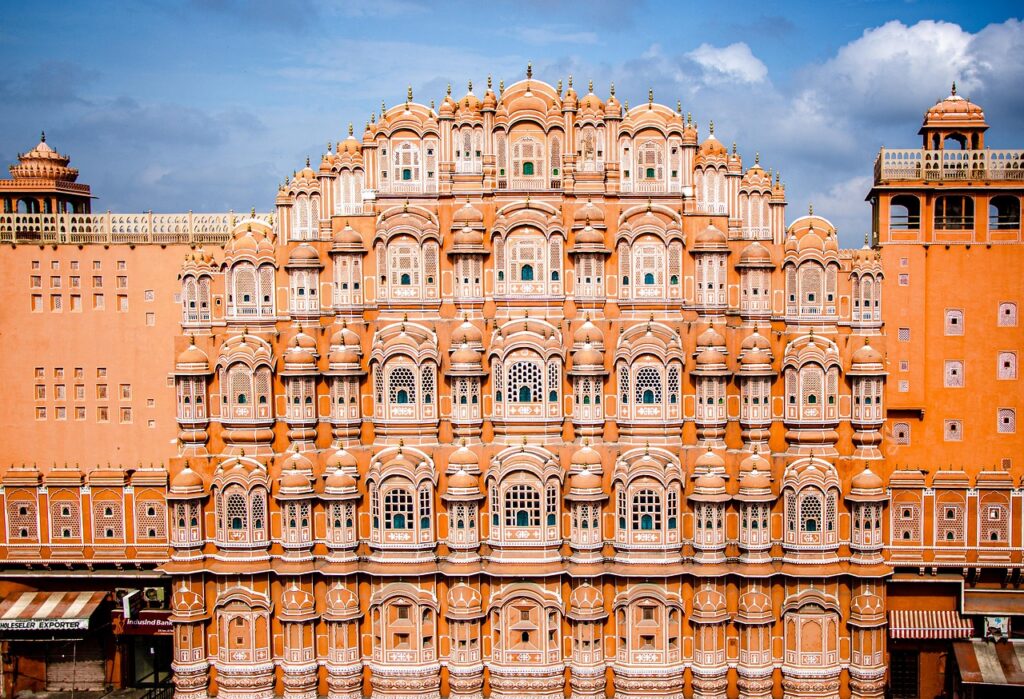
1. Jaipur: The Best Starting Point for a First Rajasthan Trip
Jaipur is usually the easiest place to begin understanding Rajasthan.
Known as the Pink City, Jaipur combines a planned historic core with a busy modern city. It was founded in 1727 by Sawai Jai Singh II, who moved the capital from Amber to the new city. Rajasthan Tourism describes Jaipur as one of the three cities of India’s Golden Triangle, alongside Delhi and Agra. Rajasthan Tourism
The city’s appeal is its concentration of major sights. Start with our Jaipur travel guide for the Pink City’s major attractions, realistic itineraries, food, shopping and practical planning.
What to see in Jaipur
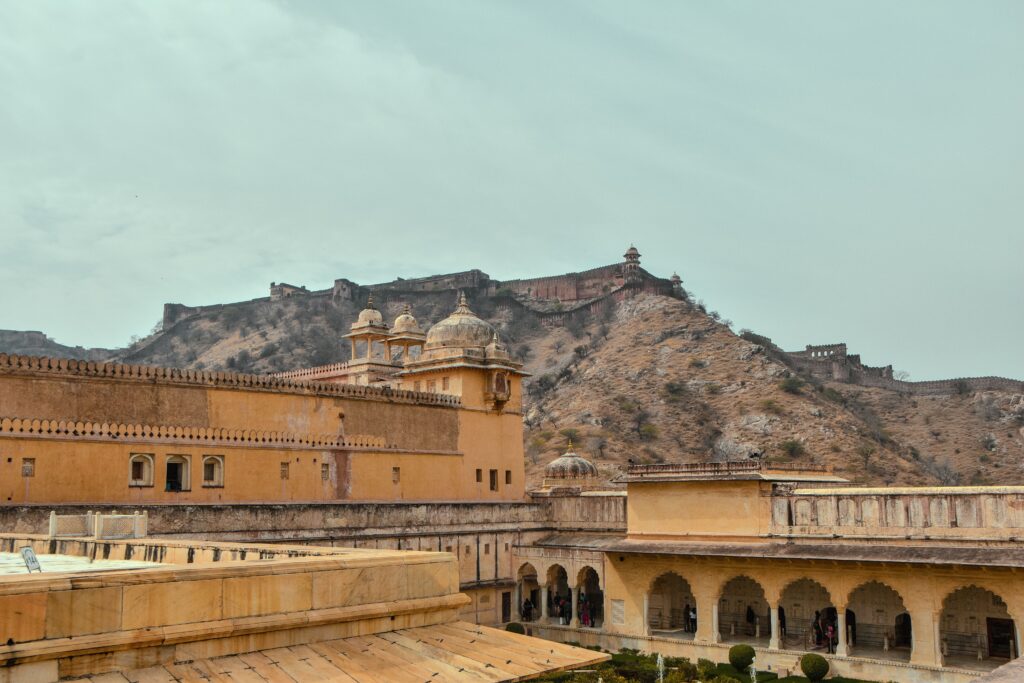
Amber Palace should be high on your list. Located outside central Jaipur, the palace combines Rajput and Mughal architectural influences and forms part of the UNESCO-listed Hill Forts of Rajasthan.
Hawa Mahal is Jaipur’s most recognisable façade. Its latticed windows were designed to allow women of the royal household to observe street life without being seen.
Jantar Mantar is more unusual than the average historic monument. The observatory contains large astronomical instruments designed to measure time and observe celestial movements. It is also a UNESCO World Heritage property.
Beyond the major monuments, Jaipur is worth exploring through its markets, old streets, jewellery shops, textiles and food.
How long should you spend in Jaipur?
2 to 3 days is a practical starting point.
Two days can cover the major sights. Three gives you more time for markets, food and a slower exploration of the old city.
Who should choose Jaipur?
Choose Jaipur if this is your first Rajasthan trip and you want a destination with a strong mix of history, architecture, shopping and city life.
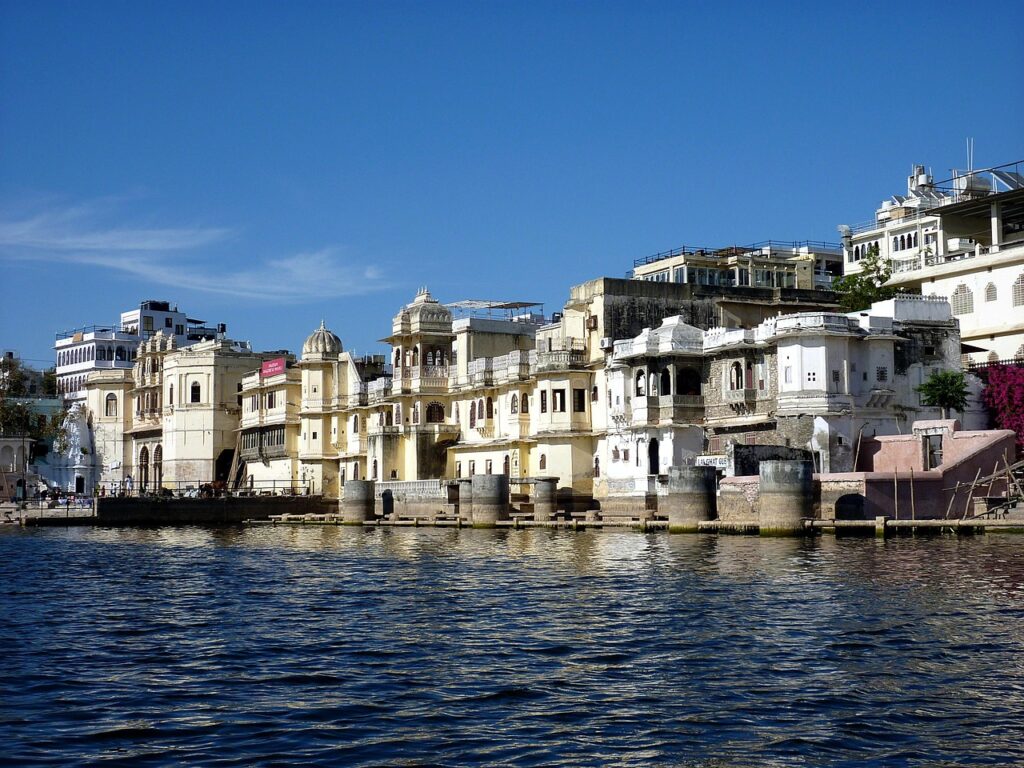
2. Udaipur: Rajasthan’s Lakes and Palace City
Udaipur changes the mood completely.
Instead of Jaipur’s busy urban energy, Udaipur is built around water, hills and palace architecture. Rajasthan Tourism describes it as the city of lakes and palaces, with Lake Pichola, City Palace, Jag Mandir and the Monsoon Palace among its major attractions. Rajasthan Tourism
The city was founded in 1553 by Maharana Udai Singh II as the capital of Mewar. Its setting in the Girwa Valley, surrounded by the Aravallis, is a major part of its character.
Udaipur brings a different side of Rajasthan to the trip, with lakes, palaces and Mewar heritage. See our places to visit in Udaipur guide.
What to see in Udaipur
City Palace is the obvious starting point. The complex rises above Lake Pichola and contains courtyards, balconies, rooms, gardens and detailed decorative work.
Lake Pichola is central to the Udaipur experience. A boat ride gives you a different perspective of the City Palace and the lake’s island palaces.
Jag Mandir sits on an island in Lake Pichola and has a long royal history.
Sajjangarh, or Monsoon Palace, sits above the city and provides broad views over Udaipur and the surrounding landscape.
For something quieter, places such as Saheliyon-ki-Bari, Bagore Ki Haveli, Shilpgram and the city’s other lakes add another layer to the trip.
How long should you spend in Udaipur?
2 to 3 days works well for a first visit.
Udaipur is also one of those places where adding an extra day can make sense. The city rewards slower mornings and evenings rather than a checklist of attractions.
Who should choose Udaipur?
Udaipur suits travelers interested in architecture, lakes, photography, history and slower city breaks.
It is also an easy destination to pair with other parts of southern Rajasthan later.
3. Jodhpur: Where the Fort Dominates the City
Jodhpur is one of Rajasthan’s most visually distinctive cities.
The old city is famous for its blue-painted buildings, while the enormous Mehrangarh Fort rises above it from a rocky hill. Rajasthan Tourism traces Jodhpur’s foundation to 1459, when Rao Jodha established the city as the centre of the Rathore kingdom. Rajasthan Tourism
The scale of Mehrangarh is what makes Jodhpur different.
What to see in Jodhpur
Mehrangarh Fort is the main attraction. The fort contains palaces, courtyards and museum collections and dominates the city’s skyline. Rajasthan Tourism notes that the fort rises roughly 125 metres above Jodhpur.
Jaswant Thada offers a quieter architectural stop close to the fort.
Umaid Bhawan Palace represents a much later period of Jodhpur’s history. Built in the 20th century, its architecture combines Indian and Western influences.
Then there is the old city itself. Wandering through the streets around the fort gives you a better sense of Jodhpur than simply moving from one monument to another.
How long should you spend in Jodhpur?
2 days is enough for most first-time visitors.
A third day makes sense if you want to explore nearby villages, food experiences or take the trip more slowly.
Who should choose Jodhpur?
Jodhpur is a strong choice for travelers who care about forts, architecture, photography, history and old-city exploration.
4. Jaisalmer: The Rajasthan Desert Experience
Jaisalmer is where Rajasthan begins to feel completely different.
Located close to the Thar Desert and India’s western frontier, the city is known for its golden sandstone architecture and the Jaisalmer Fort, also called Sonar Qila. What makes the fort particularly unusual is that it remains a living urban settlement with homes, shops, hotels and historic havelis inside its walls. Rajasthan Tourism
That changes how you experience it.
You are not simply walking through a preserved monument. People still live and work within the historic fort.
What to see in Jaisalmer
Jaisalmer Fort is the centrepiece.
The fort is also part of the UNESCO World Heritage property known as the Hill Forts of Rajasthan. UNESCO specifically identifies Jaisalmer as an example of a hill fort built in desert terrain, with an inhabited township and Jain temples within its historic fabric. UNESCO World Heritage Centre
Outside the fort, explore the city’s historic havelis, Gadisar Lake and the desert landscapes around Jaisalmer.
For many visitors, the defining experience is a desert excursion, usually involving the dunes around the Jaisalmer region.
The Desert National Park is another side of the area. It protects a representative section of the Thar ecosystem and supports species including blackbuck, chinkara and the endangered Great Indian Bustard.
How long should you spend in Jaisalmer?
2 to 3 days is a sensible range.
A short visit can cover the fort and city. More time allows you to add a desert experience without making the trip feel rushed.
Who should choose Jaisalmer?
Choose Jaisalmer if the Rajasthan experience you are looking for involves desert landscapes, sandstone architecture, havelis and something genuinely different from a conventional city break.
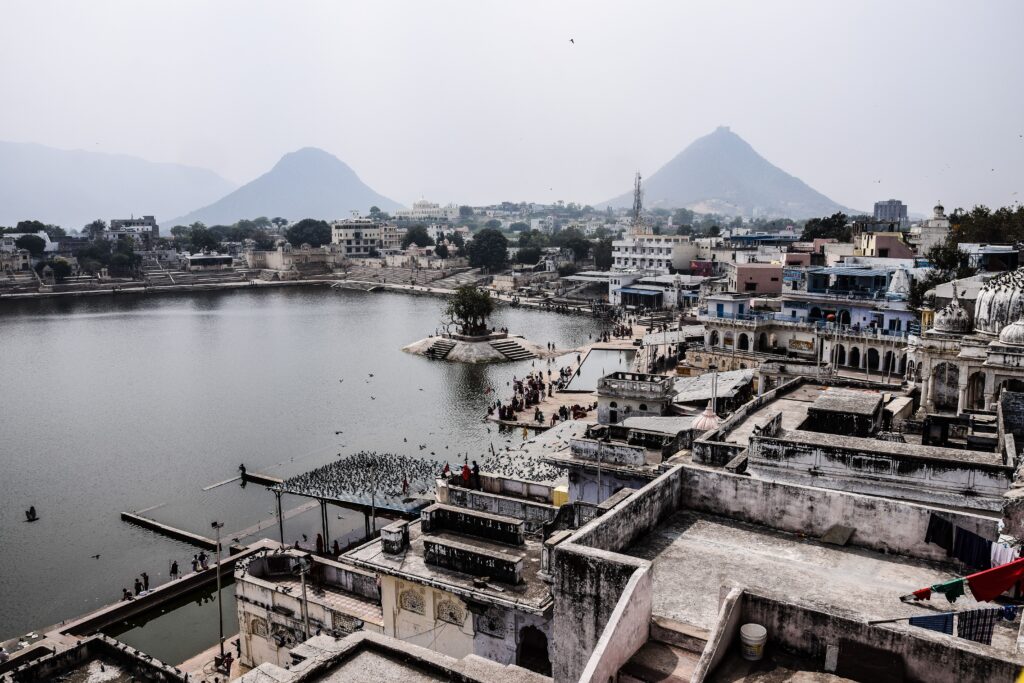
5. Pushkar: A Smaller Rajasthan With a Different Rhythm
Pushkar is smaller than Jaipur, Udaipur or Jodhpur, and that is part of its appeal.
The town developed around the sacred Pushkar Lake and is one of Rajasthan’s important pilgrimage destinations. Rajasthan Tourism describes Pushkar as one of India’s oldest cities and highlights its religious history, temples, ghats and annual fair. Rajasthan Tourism
The lake is surrounded by bathing ghats and temples, giving the centre of town a very different atmosphere from Rajasthan’s large historic cities.
What to see in Pushkar
Pushkar Lake is the heart of the town. Rajasthan Tourism records 52 bathing ghats around the lake and describes its importance in Hindu pilgrimage.
Brahma Temple is one of Pushkar’s defining landmarks. The temple is dedicated to Brahma and stands close to the lake.
Savitri Temple sits on a hill overlooking Pushkar and offers wide views of the lake and surrounding landscape.
Pushkar is also known for its markets, vegetarian food, cafés and desert activities.
How long should you spend in Pushkar?
1 to 2 days is enough for most travelers.
Because Pushkar is close to Ajmer, it can also be incorporated into a wider Rajasthan itinerary rather than treated as a long standalone stay.
Who should choose Pushkar?
Pushkar works particularly well for travelers interested in pilgrimage, temples, local markets, vegetarian food, photography and a slower small-town atmosphere.
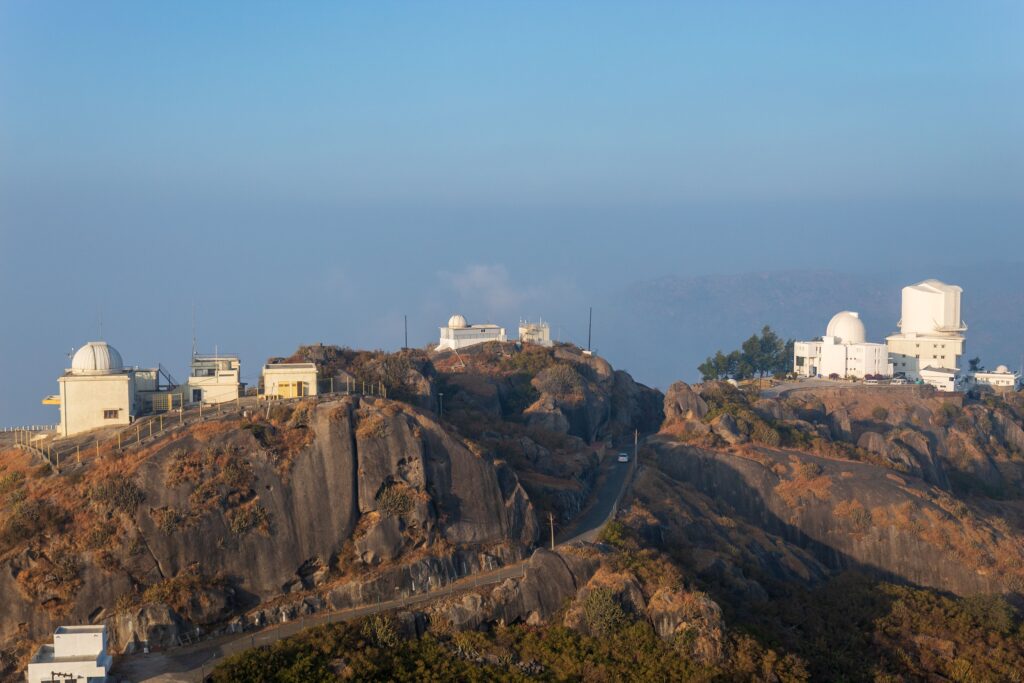
6. Mount Abu: The Rajasthan You Might Not Expect
Mount Abu is the outlier on this list.
Rajasthan is associated with deserts and dry landscapes, but Mount Abu sits in the Aravalli range and is the state’s only hill station. Rajasthan Tourism places it at 1,722 metres above sea level and highlights its green surroundings, lakes, waterfalls and religious architecture. Rajasthan Tourism
That makes Mount Abu useful for a Rajasthan itinerary because it gives you a different landscape rather than another variation of the fort-and-palace experience.
What to see in Mount Abu
Nakki Lake is one of the town’s best-known attractions.
The surrounding hills provide opportunities for viewpoints and walks, while the Dilwara temples are particularly important for their Jain architecture and detailed marble craftsmanship.
Mount Abu also has a strong religious character, with both Hindu and Jain sites around the region.
How long should you spend in Mount Abu?
2 days is a reasonable starting point.
The destination works particularly well when you want a break from Rajasthan’s hotter, drier cities.
Who should choose Mount Abu?
Mount Abu is worth considering if you want hills, greenery, temples, cooler weather and a quieter change of pace
Which Places Should You Combine on One Rajasthan Trip?
This is where planning becomes more useful than simply knowing the attractions.
Trying to fit every famous Rajasthan destination into one trip can turn the holiday into a sequence of hotel check-ins and long transfers.
A better approach is to build the itinerary around a region or travel theme.
For a classic first Rajasthan trip
Jaipur + Jodhpur + Udaipur
This gives you three very different city experiences:
- Jaipur for the historic capital and major monuments
- Jodhpur for Mehrangarh and the old city
- Udaipur for lakes and palace architecture
For forts, history and desert
Jaipur + Jodhpur + Jaisalmer
This route gives more emphasis to Rajasthan’s fortified cities and finishes with the Thar Desert.
For a slower trip
Udaipur + Pushkar + Jaipur
This combination leaves room for lakes, temples, markets and historic neighbourhoods without making every day a long travel day.
For a broader Rajasthan experience
Jaipur + Jodhpur + Jaisalmer + Udaipur
This is a more ambitious itinerary and needs enough time to avoid turning the trip into a transport exercise.
Pushkar or Mount Abu can then be added depending on your interests and available days.
How Many Days Do You Need in Rajasthan?
There is no single correct number.
Your trip length should determine how many destinations you choose, rather than the other way around.
| Trip length | A sensible approach |
|---|---|
| 3 days | Jaipur |
| 4 to 5 days | Jaipur + Pushkar, or Jaipur + Udaipur |
| 6 to 7 days | Jaipur + Jodhpur + Udaipur |
| 8 to 10 days | Jaipur + Jodhpur + Jaisalmer + Udaipur |
| 10+ days | Add Pushkar or Mount Abu, depending on your interests |
These are planning frameworks, not fixed itineraries. Travel times, transport availability and your preferred pace can change the calculation.
For a first trip, three or four destinations are usually easier to enjoy than trying to collect every famous place in Rajasthan.
When Is the Best Time to Visit Rajasthan?
The cooler months are generally the most comfortable period for exploring Rajasthan’s major cities and desert areas.
October to March is the main period most travelers consider for a Rajasthan trip, particularly when sightseeing outdoors is a major part of the itinerary.
Summer can be very hot, especially in the desert and inland cities.
Mount Abu behaves differently because of its elevation and hill environment.
The monsoon can also change the character of destinations such as Udaipur and Mount Abu. Greenery and rain can add a different visual quality, although weather conditions can affect outdoor plans.
If you are planning around a specific month, check the conditions for each destination rather than treating “Rajasthan weather” as one uniform thing.
How to Choose the Right Rajasthan Destination
A simple way to narrow the choice is to start with what you want to see.
Choose Jaipur if:
You want history, architecture, markets and a convenient first introduction to Rajasthan.
Choose Udaipur if:
You want lakes, palaces, photography and a slower atmosphere.
Choose Jodhpur if:
You want one of Rajasthan’s strongest fort-and-old-city experiences.
Choose Jaisalmer if:
You want the desert, sandstone architecture and an inhabited historic fort.
Choose Pushkar if:
You want temples, pilgrimage culture, markets and a smaller town.
Choose Mount Abu if:
You want hills, greenery, temples and a break from the desert landscape.
That distinction is more useful than simply asking which destination is the “best.”
What Makes Rajasthan Different From Other Indian Destinations?
Rajasthan’s strongest feature is the way history is embedded into ordinary travel.
A fort can overlook a working city. A centuries-old market can sit beside a modern café. A palace can become a museum, hotel or cultural attraction. In Jaisalmer, the historic fort itself remains inhabited. UNESCO notes that the Hill Forts of Rajasthan contain not only defensive structures but also palaces, temples, trading centres and urban settlements. UNESCO World Heritage Centre
The state’s architecture also changes with geography.
Jaipur’s monumental urban planning feels different from Jodhpur’s hilltop fort. Jaisalmer’s golden sandstone responds to its desert setting. Udaipur’s architecture is shaped by lakes and the Aravallis.
And then there is Mount Abu, where the landscape shifts from Rajasthan’s familiar dry plains to a green hill environment.
That variety is why a Rajasthan trip can feel like several different journeys stitched together.
Practical Tips for Planning a Rajasthan Trip
Don’t book too many cities
Rajasthan is large. A map can make destinations look closer than they feel once road and rail journeys are involved.
Give yourself enough time to actually experience each place.
Start with the destinations, then build the route
Decide what matters most to you first.
If the desert is essential, Jaisalmer needs to be part of the plan. If architecture is your priority, Jaipur, Jodhpur and Udaipur give you very different experiences.
Leave room for unplanned exploration
Some of Rajasthan’s most memorable moments may happen between major attractions: a market, a small food stop, an old lane or a viewpoint at the end of the day.
Don’t treat every fort as interchangeable
Rajasthan has an enormous number of historic forts, but their settings and histories are different.
The Hill Forts of Rajasthan UNESCO property alone contains six forts across different landscapes, including Amber, Jaisalmer, Chittorgarh, Kumbhalgarh, Ranthambore and Gagron. UNESCO World Heritage Centre
That is a good reason to choose forts based on the experience you want rather than trying to tick off as many as possible.
Plan the desert separately
Jaisalmer’s desert experience deserves its own planning. Accommodation, transport, timing and activities can vary depending on the exact area and season.
Places to Visit in Rajasthan: Where Should You Start?
If this is your first Rajasthan trip, Jaipur is the easiest starting point because it gives you a broad introduction to the state’s architecture, history, markets and food.
From there, your route should depend on what you want the trip to become.
Choose Udaipur for lakes and palaces.
Choose Jodhpur for forts and old-city character.
Choose Jaisalmer for the desert.
Choose Pushkar for pilgrimage and a smaller-town experience.
Choose Mount Abu for hills and a change of landscape.
You don’t need to see all six on your first visit.
Rajasthan becomes more interesting when you give each place enough time to feel different.
Frequently Asked Questions
What are the best places to visit in Rajasthan?
For this TravelTheory guide, the six destinations to start with are Jaipur, Udaipur, Jodhpur, Jaisalmer, Pushkar and Mount Abu. Each represents a different side of Rajasthan, from historic cities and forts to lakes, desert and hill landscapes.
How many days are enough for a Rajasthan trip?
For a first trip, 6 to 10 days gives you enough room to combine several major destinations without making the itinerary excessively rushed. Shorter trips are better focused on one or two places.
Which place is best for a first Rajasthan trip?
Jaipur is a practical starting point because it combines major historic attractions, markets, architecture and modern city infrastructure in one destination.
Is Jaisalmer worth including in a Rajasthan itinerary?
Jaisalmer is particularly useful if you want to experience Rajasthan’s desert landscape. Its historic fort is also unusual because the fortified town remains inhabited. Rajasthan Tourism
Is Pushkar worth visiting?
Pushkar is worth considering if you are interested in pilgrimage, temples, ghats, markets and a smaller-town atmosphere. Its proximity to Ajmer also makes it relatively easy to combine with other destinations.
Is Mount Abu part of Rajasthan?
Yes. Mount Abu is Rajasthan’s only hill station and sits in the Aravalli range. Its landscape is considerably greener and more elevated than the state’s desert and semi-arid regions. Rajasthan Tourism
The TravelTheory Take
Places to Visit in Rajasthan: Where Should You Start?
The best places to visit in Rajasthan depend on what you want from the trip.
Jaipur is a practical starting point for history, architecture and markets. Udaipur brings lakes and palaces into the picture. Jodhpur is about forts and old-city character, while Jaisalmer introduces the Thar Desert. Pushkar offers temples, pilgrimage culture and a slower pace. Mount Abu provides hills, greenery and a completely different side of Rajasthan.
You don’t need to see all six on your first visit. Pick the destinations that match your interests, give them enough time, and leave the rest for another Rajasthan trip.
Pingback: Jaipur Tour Guide: 10 Essential Places & Tips