Thailand is often an easy country for vegetarians to eat in. Rice, noodles, vegetables, tofu, coconut milk, herbs and tropical fruits are everywhere, and vegetarian versions of many familiar Thai dishes are widely available. The catch is that Thai food relies heavily on sauces and pastes, and some of them contain fish or seafood even when there is no meat visible in the finished dish.
That means ordering vegetarian food in Thailand is less about avoiding anything that looks like meat and more about understanding what goes into the cooking. Fish sauce, shrimp paste and oyster sauce are the three ingredients you are most likely to encounter. Once you know what to ask for, eating your way through Thailand becomes considerably easier.
Is Thailand vegetarian-friendly?
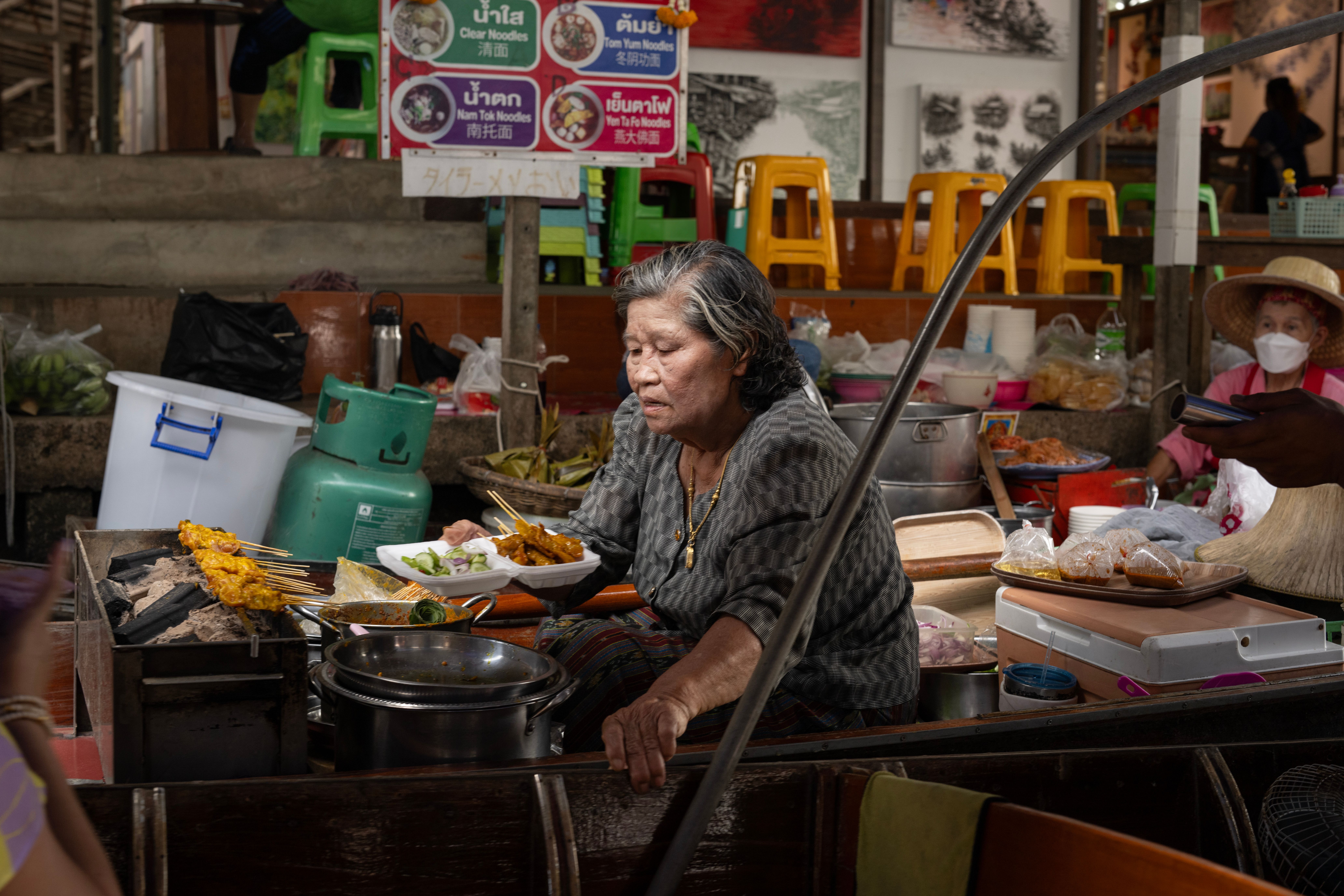
Yes, Thailand is generally a comfortable destination for vegetarian travelers. Vegetables and tofu are common ingredients, while rice and noodles form the base of countless dishes. Vegetarian restaurants and food stalls can also be found in major tourist areas, particularly in Bangkok, Chiang Mai, Phuket and other cities with large visitor populations.
The complication comes from traditional seasoning. A plate of stir-fried vegetables might contain oyster sauce, while a seemingly simple papaya salad can include fish sauce or dried shrimp. Some curry pastes also use shrimp paste, so simply asking for the meat to be removed may not be enough.
For travelers who follow a strict vegetarian or vegan diet, the safest approach is to mention the specific ingredients you avoid. If a restaurant cannot confirm what is in a sauce or curry paste, choosing another dish is usually easier than trying to work around an uncertain recipe.
Vegetarian and Jay food are not exactly the same
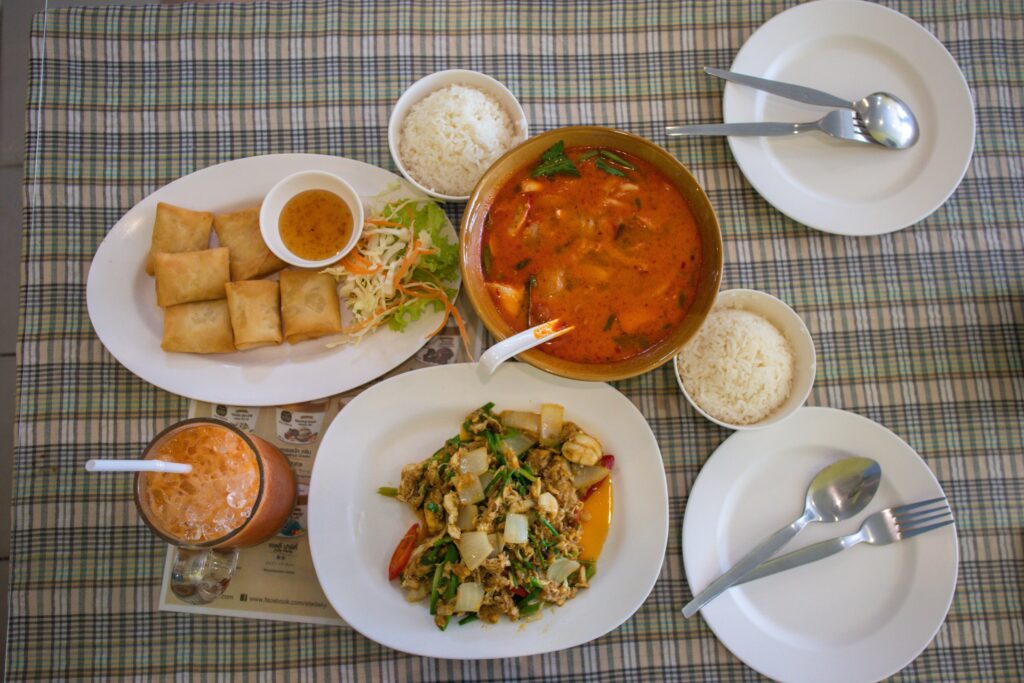
Two Thai terms are particularly useful when you’re looking for meat-free food: mangsawirat and jay.
Mangsawirat (มังสวิรัติ) generally refers to vegetarian food. The exact interpretation can vary, particularly when it comes to ingredients such as eggs and dairy, so it is still worth explaining your dietary requirements if you are strict about what you eat.
Jay (เจ) refers to a stricter form of meat-free eating associated with Chinese-Thai religious traditions. Jay food follows additional restrictions beyond simply avoiding meat, and it is often prepared without animal-derived ingredients and certain strongly flavoured vegetables.
For a traveler, this distinction can be useful. If you eat eggs or dairy, regular vegetarian food may give you more choices. If you avoid all animal products and want to make your requirements especially clear, looking for jay food can be a practical option.
Thai vegetarian dishes worth trying
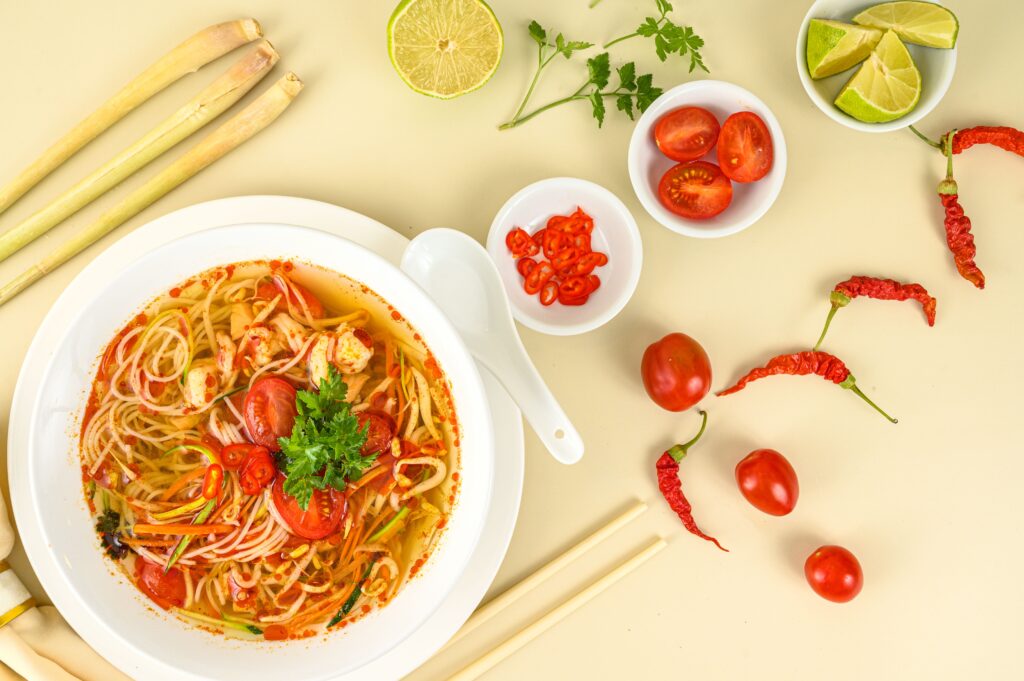
Pad Thai with tofu
Pad Thai is one of the easiest Thai dishes to adapt for vegetarians. Rice noodles are stir-fried with ingredients such as tofu, bean sprouts, peanuts and vegetables, then finished with the familiar combination of sweet, sour and salty flavours.
The important part is the sauce. Traditional Pad Thai seasoning can include fish sauce, so ask for a vegetarian preparation rather than simply ordering Pad Thai without meat. Tofu makes a good replacement because it absorbs the sauce and adds enough substance to turn the noodles into a proper meal.
Pad Pak Ruam
Pad pak ruam is a simple mixed vegetable stir-fry, and it can be one of the most useful dishes to know when traveling around Thailand. Depending on the restaurant, you may find vegetables such as cabbage, carrots, mushrooms, baby corn, morning glory and other seasonal produce cooked together.
It is a straightforward meal, but the seasoning still needs checking. Oyster sauce and fish sauce are commonly used in Thai stir-fries, so ask whether the dish can be prepared without them. At restaurants that cook to order, this is often an easy adjustment.
Green curry with tofu
Thai green curry gets much of its character from coconut milk, green chilies, herbs and aromatic spices. A vegetarian version with tofu can be rich and filling, especially when served with steamed jasmine rice.
The curry paste is the part to investigate. Some traditional Thai curry pastes contain shrimp paste, which means removing meat from the finished curry does not necessarily make the dish vegetarian. A vegetarian restaurant or a restaurant using a suitable vegetarian curry paste is the safer choice.
Som Tam
Som tam, or green papaya salad, is one of Thailand’s best-known dishes. Shredded unripe papaya is traditionally pounded with ingredients such as chilies, lime and seasonings, creating a salad that is spicy, sour, salty and slightly sweet.
Traditional versions can contain fish sauce and dried shrimp, so vegetarians should ask for those ingredients to be left out. You may see restaurants or stalls offering som tam jay, which is a useful term to look for when searching for a meat-free version.
Stir-fried morning glory
Morning glory, known locally as phak bung, is a popular vegetable dish in Thailand. The greens are usually cooked quickly with garlic and seasoning, giving them a soft texture while retaining some bite.
It is easy to assume that a vegetable dish like this is automatically vegetarian, but the sauce can contain oyster sauce or fish sauce. Ask before ordering, particularly at restaurants serving traditional Thai food.
Tofu dishes
Tofu appears in a wide range of Thai dishes, including stir-fries, noodle dishes and soups. This makes it one of the most useful ingredients for vegetarian travelers because it can often replace meat without changing the basic structure of a dish.
You can sometimes ask a restaurant to substitute tofu for chicken, pork or seafood. Just remember that changing the main ingredient doesn’t necessarily change the sauce or cooking stock. The rest of the dish still needs to be vegetarian.
Vegetable fried rice
Thai fried rice, commonly known as khao pad, is another practical choice. A vegetable version can include rice, vegetables, egg and seasoning, with tofu added for extra substance.
If you eat eggs, this can be an easy meal to order. If you don’t, ask for the egg to be left out as well. As with other stir-fried dishes, check whether fish sauce or oyster sauce is used.
Mango sticky rice
Mango sticky rice is one Thai dish that requires considerably less investigation. The dessert combines sticky rice with ripe mango and a sweet coconut-based sauce, making it a simple way to finish a meal.
It is also a good example of how varied Thai food can be for vegetarians. Once you move beyond the country’s meat and seafood dishes, there is plenty of rice, fruit, coconut-based food and vegetable-focused cooking to explore.
The ingredients vegetarians should watch for
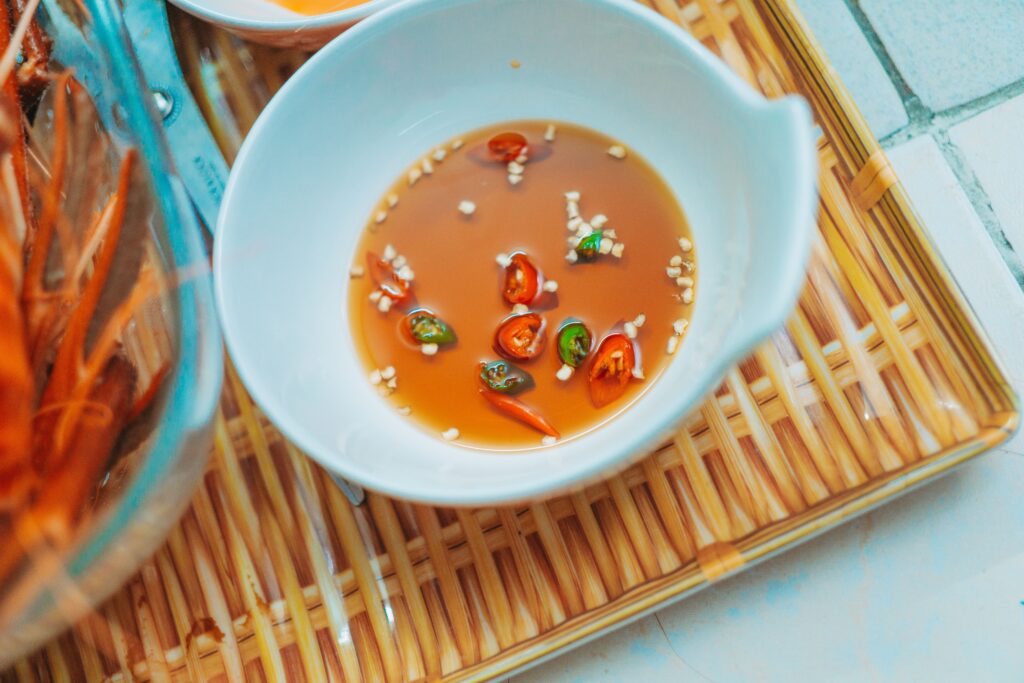
Fish sauce
Fish sauce, known as nam pla, is one of the most important ingredients to remember. It is used as a seasoning in many Thai dishes and can be present even when a dish contains no visible fish or meat.
This is why saying “no meat” may not communicate enough. If you are strictly vegetarian, specifically ask whether fish sauce has been used.
Shrimp paste
Shrimp paste, known as kapi, is another ingredient that can easily go unnoticed. It is used in traditional Thai cooking and can appear in curry pastes and certain sauces.
It matters particularly when ordering dishes that depend heavily on a prepared paste. Asking whether the paste contains shrimp can save you from accidentally ordering something that doesn’t fit your diet.
Oyster sauce
Oyster sauce is commonly used in stir-fried dishes and can appear in otherwise vegetable-heavy meals. A plate of mushrooms, broccoli or morning glory may therefore still contain an animal-derived ingredient.
If you are vegetarian, ask for oyster sauce to be left out or replaced with a suitable vegetarian sauce.
Meat and seafood broth
Soups and noodle dishes require another layer of caution. A bowl containing tofu, vegetables and noodles can still be cooked in a broth made from meat or seafood.
When ordering soup, ask what the stock is made from. Dedicated vegetarian and jay restaurants are usually easier if you want to avoid uncertainty.
Useful Thai phrases for vegetarian travelers
You don’t need to speak Thai fluently to communicate your dietary requirements. Learning a few words can make ordering easier, particularly at local restaurants or food stalls where English may be limited.
| What you want to say | Thai phrase |
|---|---|
| Vegetarian | Mangsawirat |
| Jay food | Kin jay |
| No fish sauce | Mai sai nam pla |
| No meat | Mai sai neua sat |
| No shrimp paste | Mai sai kapi |
| No oyster sauce | Mai sai hoy nang rom |
For travelers following a strict plant-based diet, kin jay is particularly useful because it refers to the stricter jay style of eating. However, if you have allergies or particularly strict dietary requirements, explaining the individual ingredients you need to avoid is still sensible.
Is street food safe for vegetarians?
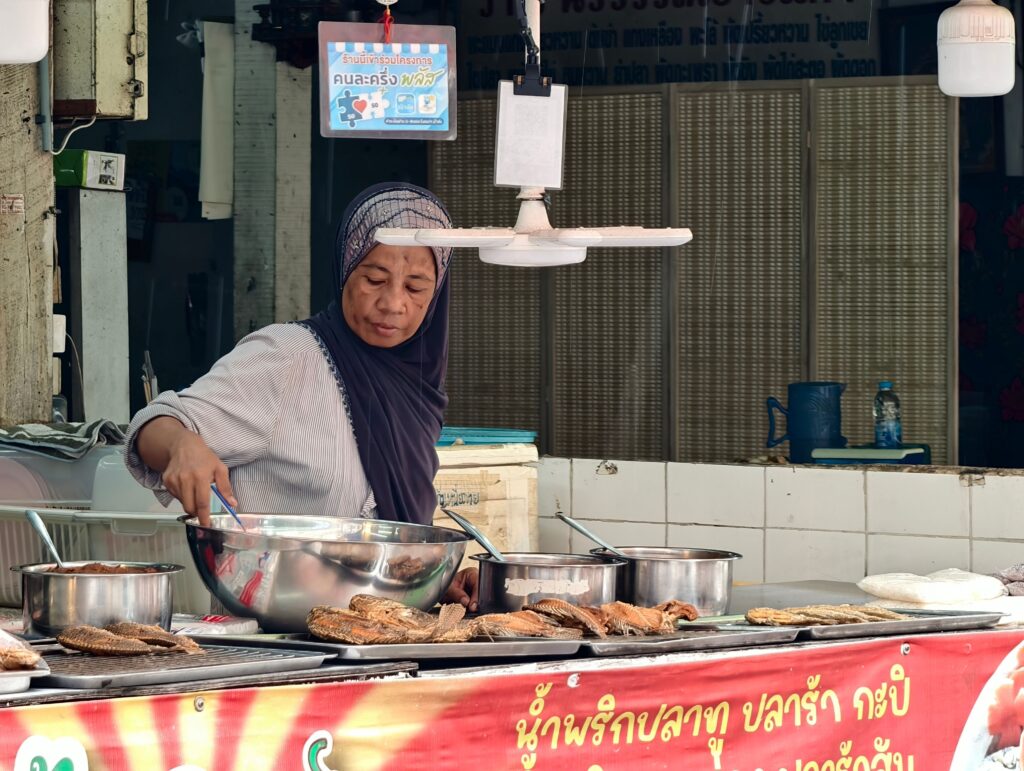
Street food can be a great way to experience Thai food, but it requires slightly more attention than ordering at a dedicated vegetarian restaurant. Many street-food vendors specialise in one or two dishes and may prepare several versions using the same sauces or cooking equipment.
Watch how the food is being prepared and ask questions before ordering. If a vendor cannot understand what you mean by vegetarian, it may be easier to choose another stall. Thailand has enough food options that there is little reason to take a chance on a dish you are unsure about.
Food courts in shopping malls can also be useful. They usually have several different stalls, giving you more opportunities to find vegetable dishes, noodles, rice and other meat-free options in one place.
Thai food changes from region to region
Thai cuisine isn’t one uniform style of cooking. The food you encounter in Chiang Mai can be quite different from what you find in Phuket or northeastern Thailand, and those differences matter when you’re eating vegetarian.
Northern Thai food has its own cooking traditions and flavours, while Isan cuisine in the northeast is known for its strong combination of spicy, salty, sour and fermented flavours. Traditional Isan dishes can make extensive use of fermented fish products, so vegetarian travelers need to be particularly careful when ordering regional specialties.
Southern Thai food is often hotter and relies on powerful curry pastes and spices. Shrimp paste is also used in many traditional southern dishes. Vegetarian versions exist, but they may require a restaurant to prepare the dish differently from the traditional recipe.
This regional variety is one of the more interesting parts of eating in Thailand. Instead of assuming that every Thai dish follows the same recipe, pay attention to where the food comes from and how it is traditionally prepared.
Phuket’s Vegetarian Festival
Thailand’s relationship with vegetarian food extends beyond everyday dining. Phuket hosts the famous Vegetarian Festival, a religious event associated with the island’s Chinese-Thai community and the worship of the Nine Emperor Gods.
During the festival, participants traditionally follow strict dietary and behavioural practices, including a meat-free diet. Jay food becomes particularly visible during this period, with restaurants and food stalls offering dishes that follow the festival’s dietary rules.
For visitors, the festival provides a different perspective on Thai food. Vegetarian eating is not simply a modern travel trend or a restaurant category. In this setting, food forms part of a much older religious and cultural tradition.
A simple way to eat vegetarian in Thailand
You don’t need to memorise the entire Thai food vocabulary before your trip. A few habits will take you a long way.
First, learn the words mangsawirat and jay. Then get used to asking about fish sauce, shrimp paste and oyster sauce rather than simply asking whether a dish contains meat. Be particularly careful with curry pastes, soups and noodle broths, where animal ingredients may be less obvious.
When possible, choose dishes that are cooked to order. This gives you a better chance of requesting substitutions or leaving out particular ingredients. Dedicated vegetarian and jay restaurants are another straightforward option, especially during the first few days of your trip.
What should vegetarians eat in Thailand?
If you’re visiting Thailand for the first time, these are some dishes and foods worth looking for:
- Tofu Pad Thai
- Vegetable fried rice
- Pad pak ruam
- Vegetarian green curry with tofu
- Vegetarian som tam
- Stir-fried morning glory
- Tofu and vegetable stir-fries
- Jay noodle dishes
- Fresh tropical fruit
- Mango sticky rice
The dish name is only part of the equation. The preparation matters just as much.
A “vegetable” dish can still contain fish sauce. A tofu curry can still contain shrimp paste. A bowl of vegetable noodles can still be served in a meat-based broth. Once you understand those details, ordering becomes much more straightforward.
Eating vegetarian without missing Thai food
Thailand doesn’t require vegetarian travelers to live on plain rice and fruit. There is a broad range of food to explore, from tofu-filled noodle dishes and coconut-based curries to spicy papaya salads, stir-fried vegetables and some excellent desserts.
The most useful habit is simply to ask questions. Learn the few Thai words that matter, check sauces and curry pastes, and look for vegetarian or jay restaurants when you want a meal without guesswork.
Once you understand how Thai food is seasoned, being vegetarian becomes much less of a limitation and much more of an opportunity to explore a different side of the country’s food culture.