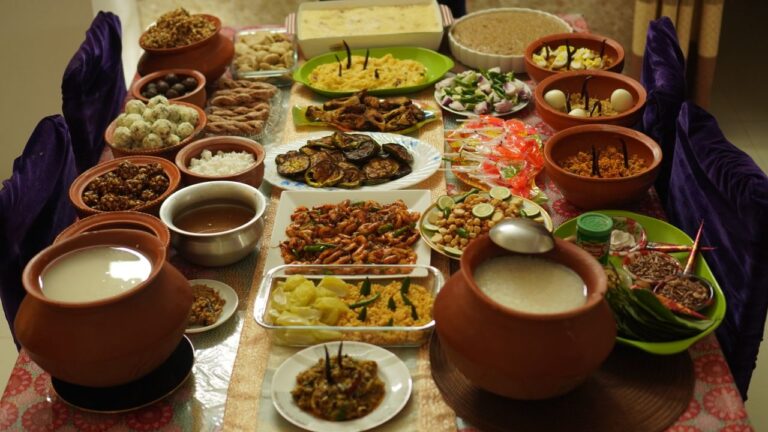
Every year, when the full moon appears in the autumn sky, families across China gather around dinner tables, share mooncakes and spend time together. Streets and homes may be decorated with lanterns, children may carry colorful lights, and stories about the moon are passed down once again. The occasion is the Mid-Autumn Festival, one of the most important traditional festivals in Chinese culture. In 2026, it falls on September 25, and although the festival has ancient roots, its central idea remains surprisingly familiar: family reunion.
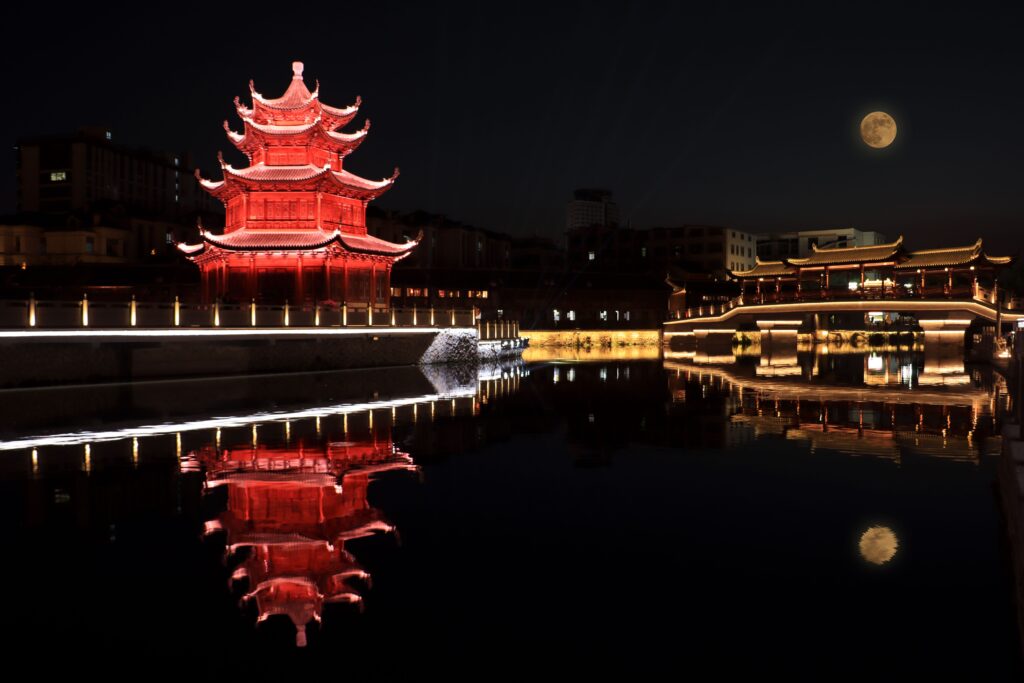
The festival is celebrated on the 15th day of the eighth month of the traditional Chinese lunar calendar. The date is significant because the moon is traditionally considered to be at its fullest and brightest on this night. For centuries, the full moon has been associated with completeness and togetherness, giving the festival an emotional meaning that goes beyond the harvest traditions from which it developed. Even when family members live in different cities or countries, the moon provides a shared symbol of home and connection.
Where the Mid-Autumn Festival Comes From
The origins of the Mid-Autumn Festival can be traced to ancient Chinese customs surrounding the moon and the autumn harvest. In agricultural societies, autumn was an important time of year. Crops had been gathered, the seasons were changing and communities had reason to give thanks for what the land had produced. Over time, traditions connected with moon worship and harvest celebrations developed into the festival known today as Mid-Autumn Festival.
The celebration became particularly established during the Tang dynasty and grew further during the Song dynasty. As centuries passed, different regions developed their own customs, foods and stories. The festival eventually became closely associated with family gatherings, moon watching and the sharing of special foods. That history explains why the festival can feel both ancient and very personal. It is rooted in seasonal traditions, but its most enduring message is about people coming together.
The full moon is central to that idea. Its round shape has traditionally represented completeness, while its appearance high in the night sky offered a way for separated family members to feel connected. Someone living far from home could look at the same moon as their parents, children or siblings. This is one reason the Mid-Autumn Festival is also commonly known as the Reunion Festival.
Why Mooncakes Are So Important
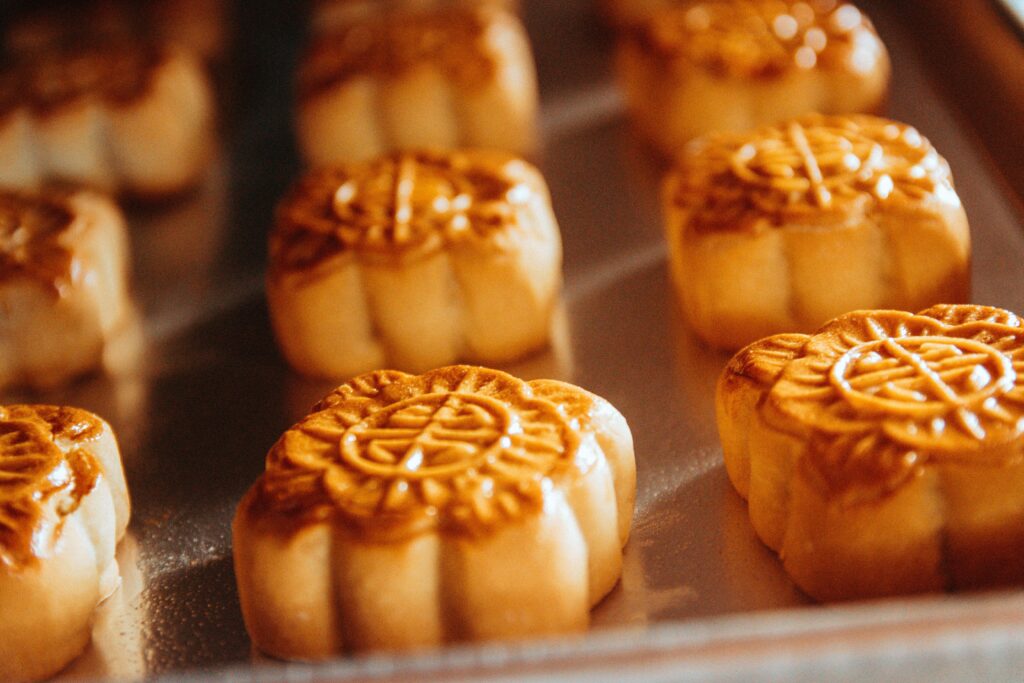
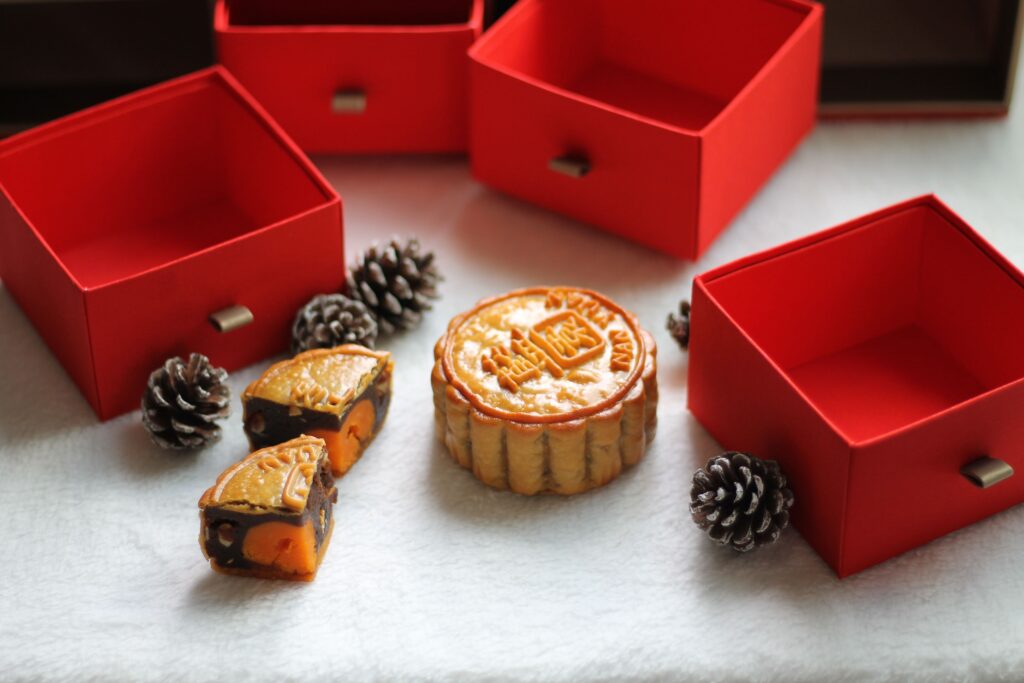
If there is one food that immediately brings the Mid-Autumn Festival to mind, it is the mooncake. These small, usually round pastries are traditionally eaten and shared during the festival, with their shape reflecting the full moon and the idea of reunion. Mooncakes have existed in different forms throughout Chinese history, and regional traditions have produced a wide variety of fillings and styles.
Some traditional mooncakes contain lotus seed paste, while others are made with red bean paste, salted egg yolks or other regional ingredients. Today, the range is much wider. Bakeries and food companies produce mooncakes with modern fillings and elaborate packaging, particularly during the weeks leading up to the festival. Despite these changes, the social meaning of the mooncake remains important. They are commonly given to relatives, friends and colleagues as festival gifts, turning a simple pastry into a symbol of good wishes and connection.
There is also something interesting about the way mooncakes are eaten. They are generally small and rich rather than something people consume in large quantities. A family might cut one into pieces and share it among several people while sitting together and talking. The act of sharing is therefore just as important as the food itself.
The Legend of Chang’e and the Moon
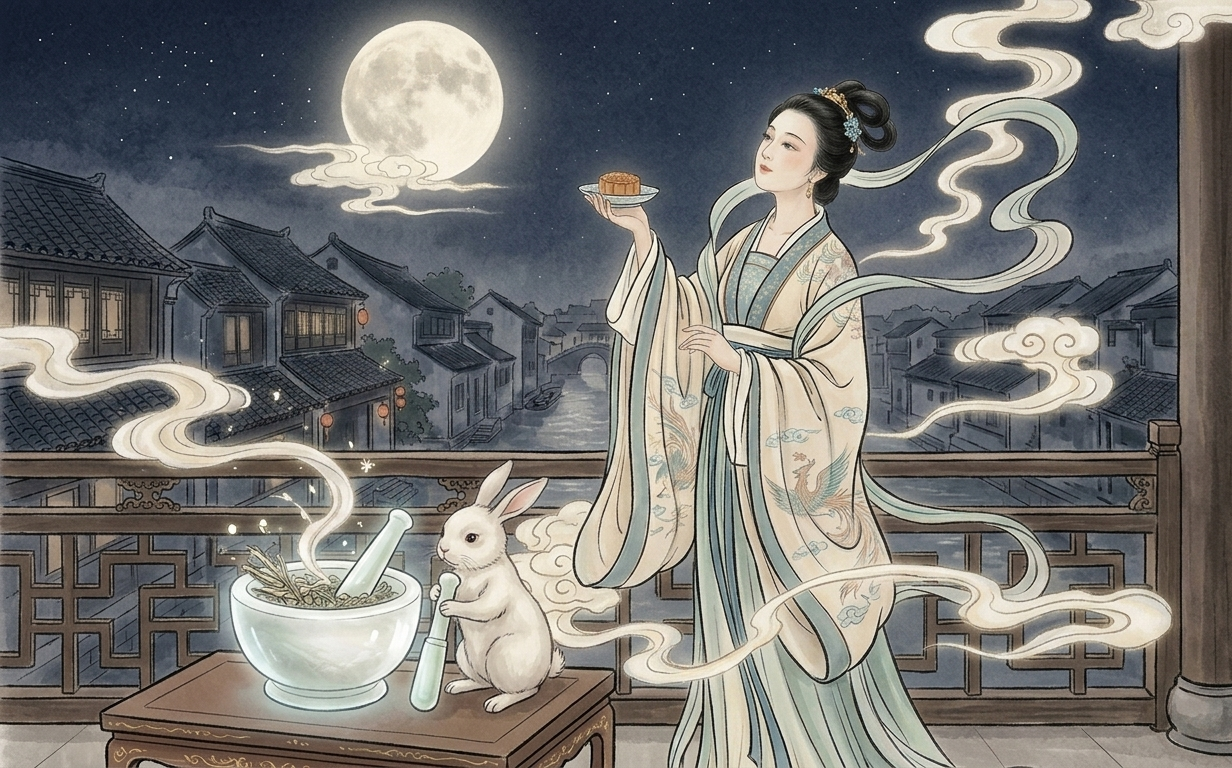
The festival is also connected with one of China’s best-known legends, the story of Chang’e. There are several versions of the tale, but the most familiar tells of Chang’e and her husband, the legendary archer Hou Yi. After Chang’e takes an elixir of immortality, she ascends to the moon and becomes separated from her husband.
The story has helped give the moon a special place in Chinese folklore. During the Mid-Autumn Festival, people have traditionally looked toward the moon while remembering Chang’e and the other characters associated with the legend. Another familiar figure is the Jade Rabbit, which is traditionally said to live on the moon alongside Chang’e.
These stories appear in lanterns, artwork, children’s books and festival decorations. They also show how festivals can preserve stories long after the circumstances that created them have changed. A child hearing the story of Chang’e today is participating in a tradition that has travelled through generations.
Lanterns and Local Traditions
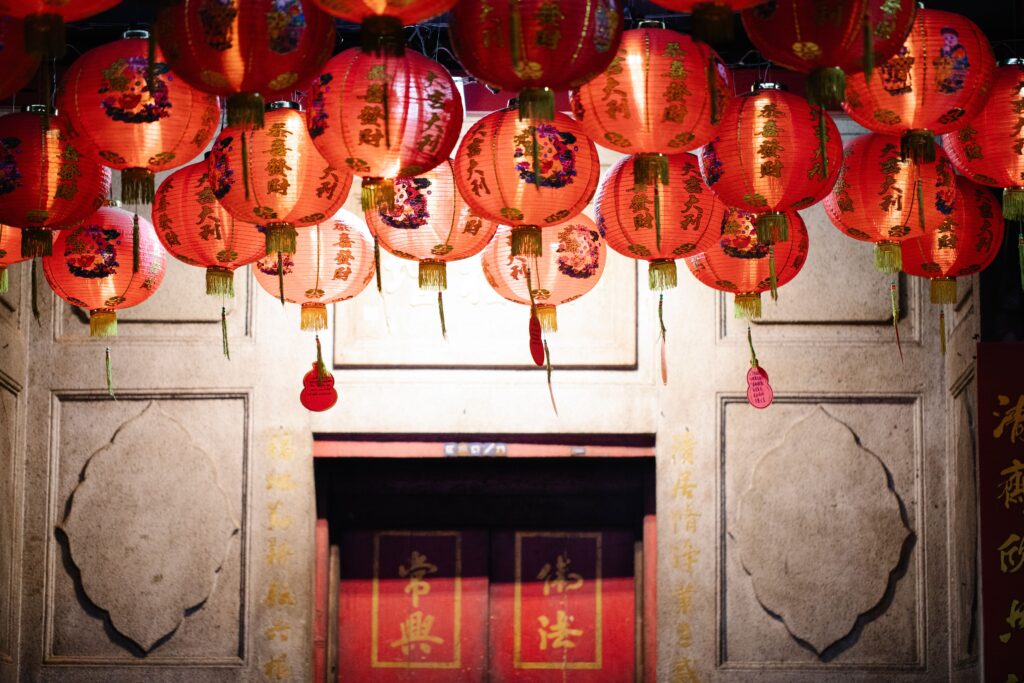
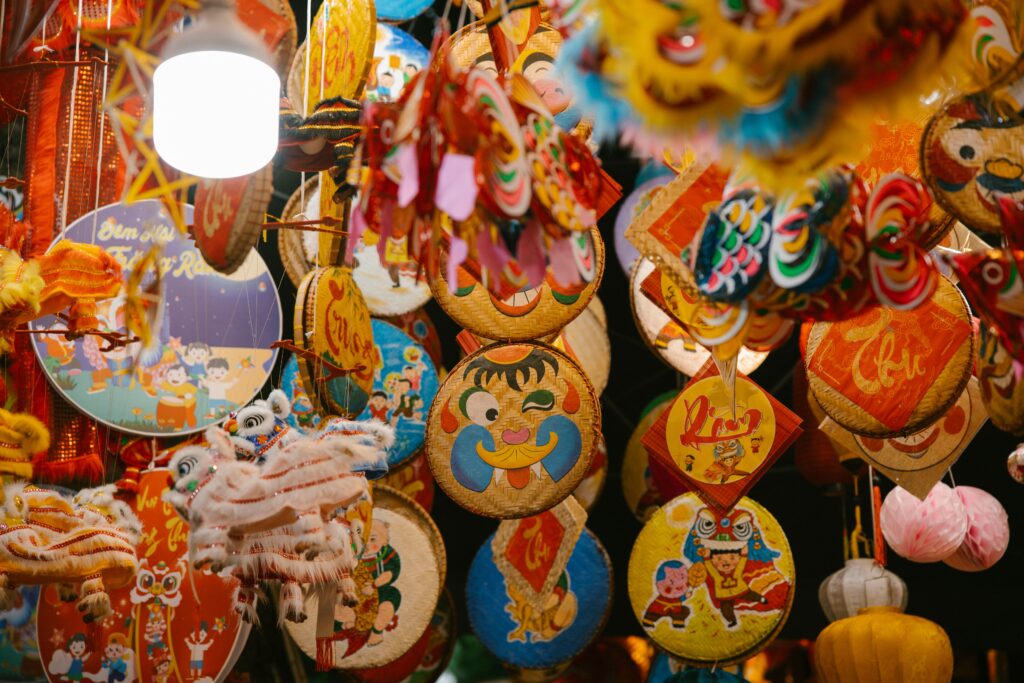
Mooncakes may be the most famous food associated with the festival, but lanterns are just as recognizable visually. In many communities, children carry lanterns during evening celebrations, while public spaces can be filled with large decorative displays. Lantern riddles are another traditional activity. Riddles are written on lanterns, and people try to solve them, turning the decorations into a simple game.
The festival doesn’t look exactly the same everywhere in China. Local communities have developed their own foods, decorations and customs, which means that there is no single Mid-Autumn Festival experience. In Beijing, for example, the folk figure known as Tu’er Ye, a rabbit-like character, has been associated with Mid-Autumn celebrations for centuries.
This regional variation is part of what makes the festival worth understanding. Large public events may attract visitors today, but the traditions developed within individual communities long before the festival became something international travelers recognized.
A Festival About Coming Home
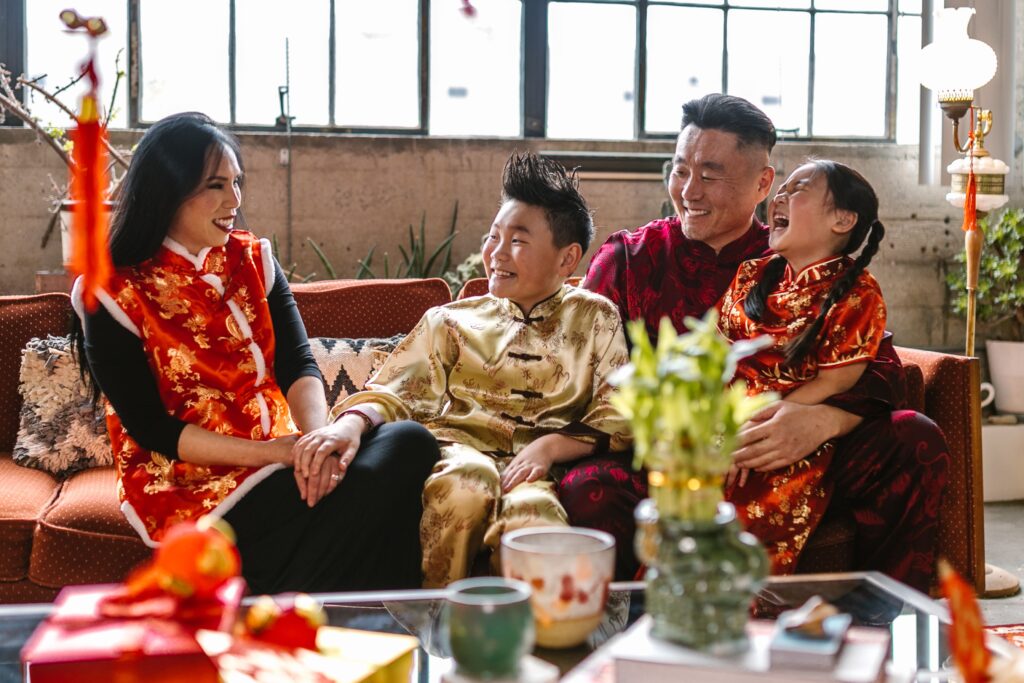
For many people, the most meaningful part of Mid-Autumn Festival is the family meal. Relatives gather, food is prepared, mooncakes are shared and the evening is spent together. The atmosphere can be lively, particularly when several generations of a family meet, but the festival can also be a quieter occasion for remembering relatives who cannot be present.
That idea has particular relevance in modern China. Millions of people live and work far from their hometowns, often in major cities. A festival centered on returning home therefore carries an emotional weight that goes beyond its ancient agricultural origins. Traveling back to see family can become an important part of the celebration.
For families who cannot reunite, the symbolism of the moon becomes even more meaningful. The tradition doesn’t require everyone to be physically in the same place. The same moon can be seen from different cities, creating a simple connection across the distance.
The Festival Beyond China
The Mid-Autumn Festival has also influenced celebrations in other parts of East and Southeast Asia, although each culture has developed its own traditions. Related celebrations can be found in places including Vietnam, South Korea, Japan, Singapore and Malaysia, with differences in food, folklore and the way the occasion is observed.
Vietnam’s Mid-Autumn celebrations, for example, have developed a particularly strong connection with children and lanterns. South Korea has Chuseok, a major autumn holiday with its own traditions surrounding family gatherings, food and ancestors. These celebrations share historical connections with broader East Asian traditions, but they should not be treated as identical versions of the same festival.
That difference is important. Cultural traditions travel, change and acquire new meanings as communities adopt them. The result is not a single festival repeated across different countries, but a collection of related traditions shaped by local history.
When Is the Mid-Autumn Festival in 2026?
The Mid-Autumn Festival falls on Friday, September 25, 2026. Because it follows the traditional Chinese lunar calendar, the date changes each year and usually falls somewhere in September or early October on the Gregorian calendar.
For travelers in China, the festival can be an interesting time to see lantern displays, seasonal foods and cultural events. It is also an important family holiday, so travel demand can increase as people return to their hometowns. Anyone planning a trip around the festival should therefore look at transportation and accommodation arrangements well in advance.
Why the Mid-Autumn Festival Still Matters
The Mid-Autumn Festival has changed considerably over the centuries. Modern celebrations can involve commercial mooncake gift boxes, large city events and elaborate lantern displays that would have been unimaginable in earlier periods. Yet the central idea has remained remarkably stable.
It is a festival built around the full moon, but the moon is really a symbol for something else: reunion. A mooncake shared at the family table, a lantern carried through the evening or a moment spent looking at the sky all connect today’s celebration with traditions that have survived for generations.
For a traveler, that is perhaps the most interesting way to understand the Mid-Autumn Festival. The lanterns and mooncakes may be what you notice first, but the deeper story is about family, memory and the feeling of being connected to people who may be far away.