
Ask someone to describe Indian food and you will probably hear about curry, naan, biryani, dosa or a long list of spices.
The problem is that all of those answers can be correct and still miss the bigger picture.
India does not really have one single cuisine. It has hundreds of food traditions that developed in different landscapes, communities and kitchens. A meal in Kerala can look completely different from one in Punjab, while food from Bengal may have little in common with what you find in Rajasthan.
That difference is not accidental. Indian food changes because India changes.
Geography comes first
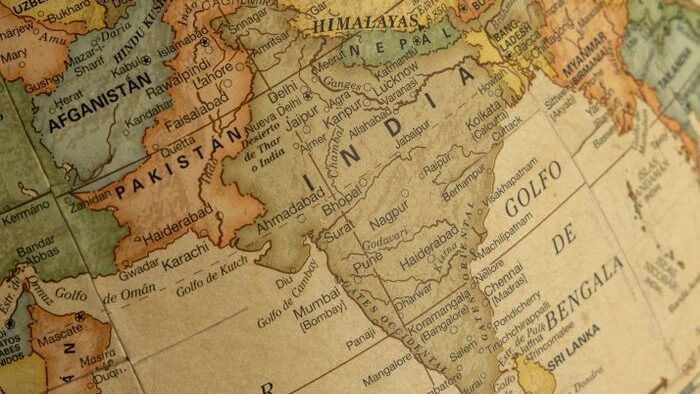
Look at a map of India and the reason becomes easier to understand.
The country has Himalayan regions in the north, dry landscapes in Rajasthan, fertile plains around the Ganges, tropical coastlines, forested areas and a long southern peninsula surrounded by water. These places do not grow the same crops or have the same climate, so their traditional cooking could hardly have developed in exactly the same way.
Rice is particularly important across much of southern and eastern India, where conditions have long supported rice cultivation. Wheat has a much stronger place in the food traditions of northern India, where flatbreads such as roti and paratha became staples.
The ingredients available nearby often determined what people cooked long before supermarkets made it possible to find almost anything anywhere.
That is why local food is often a better reflection of geography than a national food label.
The ingredients change with the land
Take coconut.
It is deeply associated with many coastal cuisines, particularly in the south and southwest, where coconut palms grow naturally. Kerala cuisine makes extensive use of coconut in different forms, while coastal Karnataka and parts of Tamil Nadu also have their own coconut-rich traditions.
Move towards drier parts of western India and the food changes. Rajasthan historically had to work with a much harsher environment and less dependable water, encouraging dishes that could use ingredients suited to dry conditions and could be stored more easily.
The same principle applies to grains, vegetables, fruits, fish, meat and even cooking oils.
India’s Ministry of Culture has described regional cuisines as products of differences in soil, climate and occupations, along with locally available spices, herbs, vegetables and fruits.
So when two Indian regions use the same spice but produce completely different dishes, the spice itself is rarely the whole story. The ingredients surrounding it matter just as much.
Religion and community shape the plate too
Geography explains only part of the difference.
Food in India is also deeply connected to religion, community and tradition. Vegetarian cooking has developed particularly rich traditions in parts of Gujarat, Rajasthan and other regions, while different communities have developed their own approaches to meat, seafood, dairy and fasting.
Even within a single state, you can find several cuisines.
Tamil Nadu is a good example. Its food traditions include Chettinad, Kongunadu, Nanjil Nadu and temple cuisines, each with its own ingredients and methods.
That is why describing an entire state as having one cuisine can sometimes be almost as misleading as describing the whole country as having one.
History left its mark too
Indian cuisine did not develop in isolation.
Trade, migration, empires and colonial rule brought new ingredients and techniques into different parts of the country. Some became so deeply absorbed into local cooking that they now feel completely Indian.
Chillies are a good example.
They came to India from the Americas through Portuguese trade routes, yet today they are so closely associated with Indian cooking that it is easy to assume they have always been part of it. Potatoes and other ingredients also arrived through these exchanges.
The Mughal period left another major influence, particularly in northern India. Mughlai cooking helped develop and popularize rich dishes involving meat, nuts, dairy, fragrant spices and techniques associated with royal kitchens. Agra’s food culture still reflects its Mughal history.
Coastal trading communities developed their own mixtures of local and outside influences as well. Mangalorean cuisine, for example, reflects South Indian, Konkani and coastal traditions shaped partly by centuries of trade and cultural interaction.
Indian food is therefore not simply ancient recipes preserved unchanged. It has always been capable of absorbing something new and making it its own.
Why South Indian food can feel so different
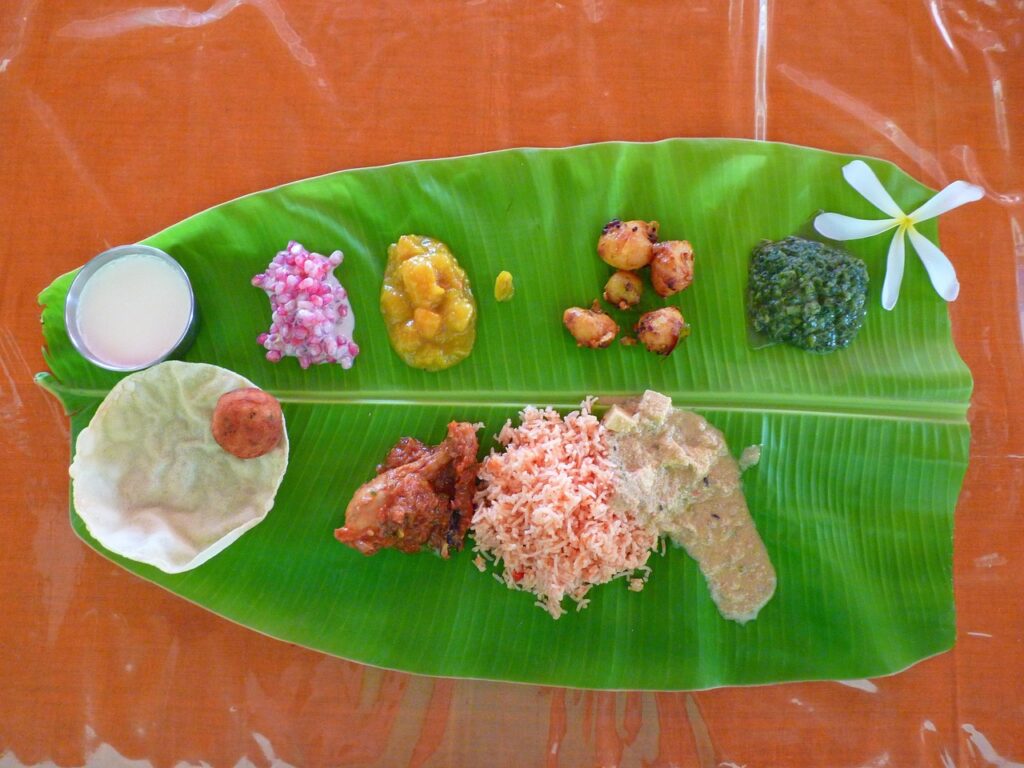
For many international travelers, the contrast is easiest to notice between northern and southern India.
Southern cuisines make extensive use of rice, lentils, coconut, curry leaves, tamarind and local vegetables, although the exact combination varies considerably between states and communities.
Tamil food, for example, has traditions built around rice, lentils, tamarind, sesame oil and a wide range of regional preparations. Kerala has its own strong relationship with coconut and seafood. Karnataka and Andhra Pradesh have different traditions again.
Even the phrase “South Indian food” hides a huge amount of variation.
A dosa from Tamil Nadu, a Kerala sadya and a Mangalorean fish curry belong to the same broad geographic region, but they tell very different culinary stories.
And northern India is not one cuisine either
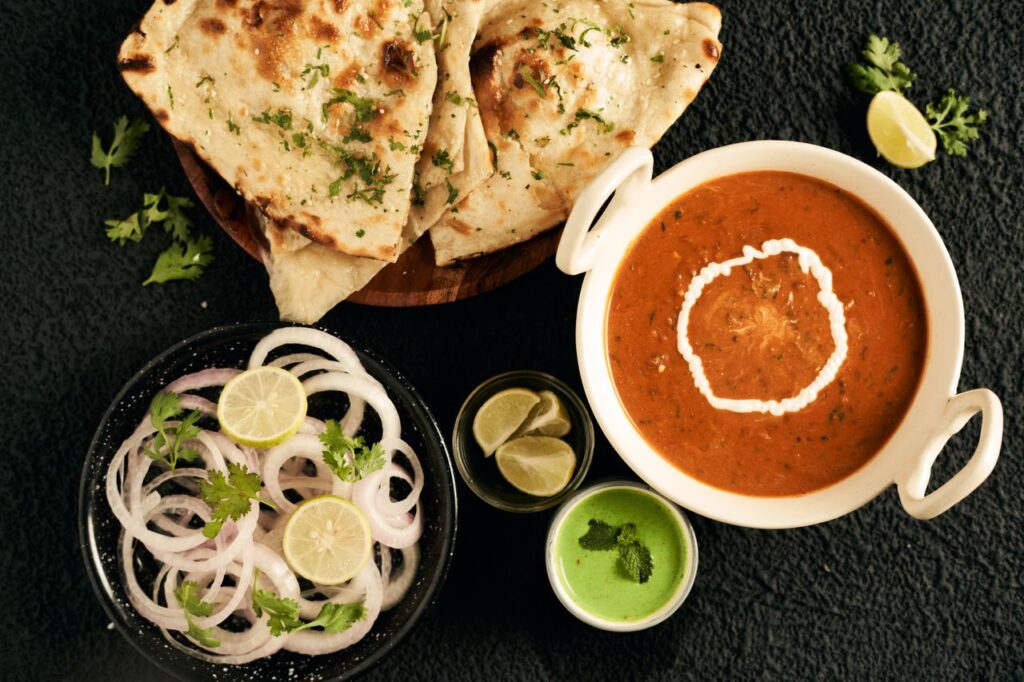
The same problem happens in the north.
Punjabi food is not the same as Kashmiri food. Rajasthani food developed under very different environmental conditions from food in the fertile plains of Uttar Pradesh.
Northern cuisines are often associated internationally with breads, dairy, kebabs and rich gravies, but that description leaves out enormous regional differences.
Rajasthan has dishes built around ingredients such as millets, lentils and locally available plants. Kashmir has its own distinctive cooking traditions, including dishes associated with its geography and cultural history. The official tourism material for northern India itself presents these cuisines as distinctly different rather than as one uniform style.
The Northeast follows a different food story
The Northeast is particularly useful for understanding why the phrase “Indian food” can be misleading.
Many cuisines there rely on ingredients, preservation methods and cooking traditions that are unfamiliar to visitors who mainly know restaurant versions of North or South Indian food.
In Arunachal Pradesh, for example, local cuisines vary among communities and regions. Meat, green vegetables, bamboo shoots and fermented or smoked ingredients play important roles in several traditions.
These cuisines are not simply variations of the food found elsewhere in India. They developed from their own landscapes and cultural histories.
So, what actually makes Indian food “Indian”?
There is no single ingredient.
It is not even the use of spices, because spices are combined differently across the country.
What connects India’s cuisines is the way food has repeatedly adapted to local ingredients, communities, beliefs, trade and history.
That is why a traveler can spend weeks eating in India and still encounter dishes that feel completely new.
And perhaps that is the better way to think about Indian cuisine. India does not have one food culture divided into regions. It has many food cultures that happen to exist within one country.
Once you understand that, ordering food while traveling becomes more interesting too. Instead of asking for “Indian food,” ask what people in that particular place actually eat.
That is where the country gets much more interesting.