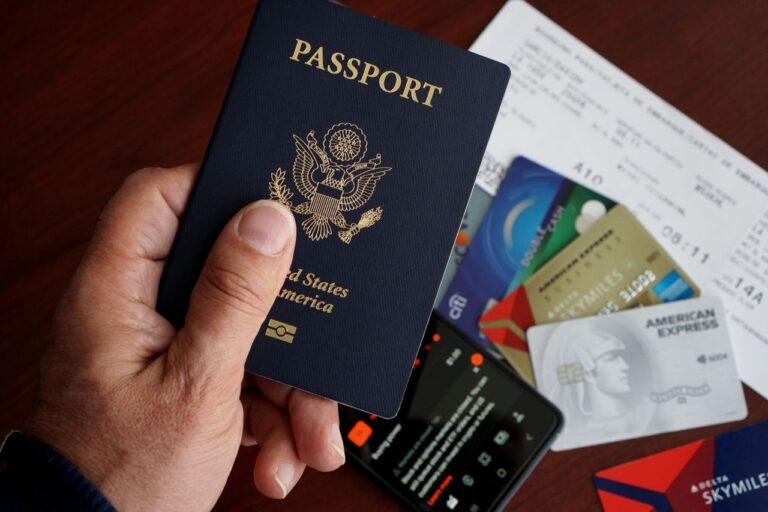
A passport and a visa are often mentioned together because travellers encounter them at roughly the same stage of a journey, but they serve different purposes. A passport is the international travel document issued by your country, while a visa relates to the destination country’s rules for admitting foreign travellers. In practical terms, one does not automatically replace the other.
The distinction matters because having a valid passport does not necessarily mean you can enter every country. Depending on your nationality, destination and reason for travel, you may also need a visa, an electronic travel authorization or another form of permission before you leave home.
What Is a Passport?
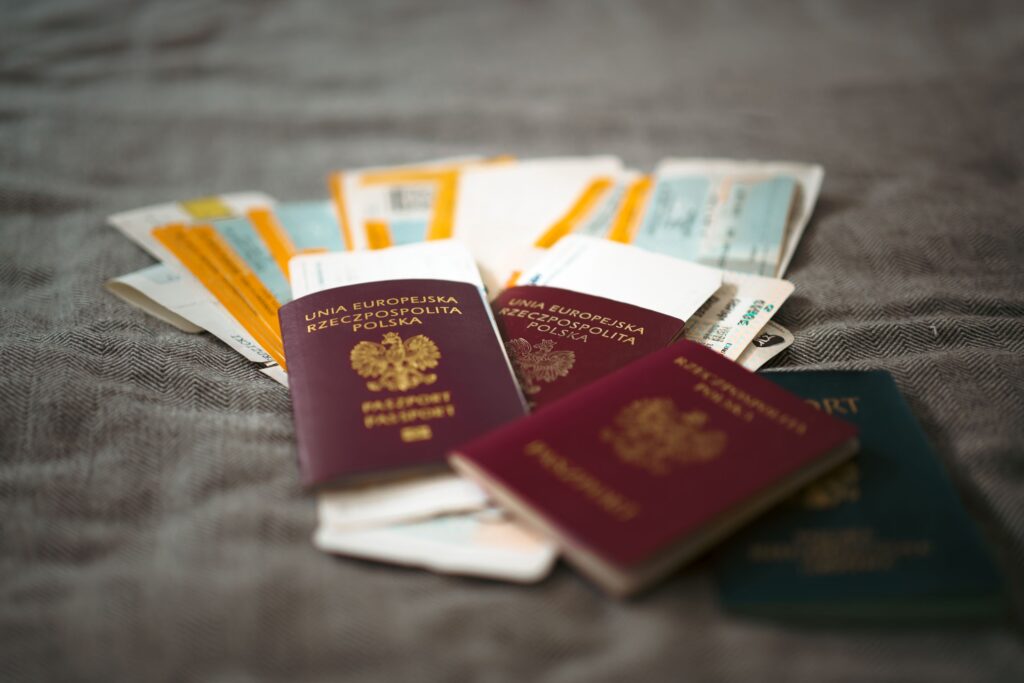
A passport is a government-issued travel document that identifies its holder and establishes the nationality or citizenship information used in international travel. It is the primary document travellers use to cross international borders, and modern passports are designed to be read and authenticated by border-control systems. ICAO describes ePassports as a principal identity document used in international travel, with standards governing their security and machine-readable features.
Passport validity is a separate issue from simply having a passport that has not expired. Some destinations require a passport to remain valid for a specified period beyond the traveller’s planned arrival or departure. The exact rule varies according to the destination and sometimes the traveller’s nationality, so the familiar idea of a universal “six-month rule” should not be treated as a global law.
What Is a Visa?
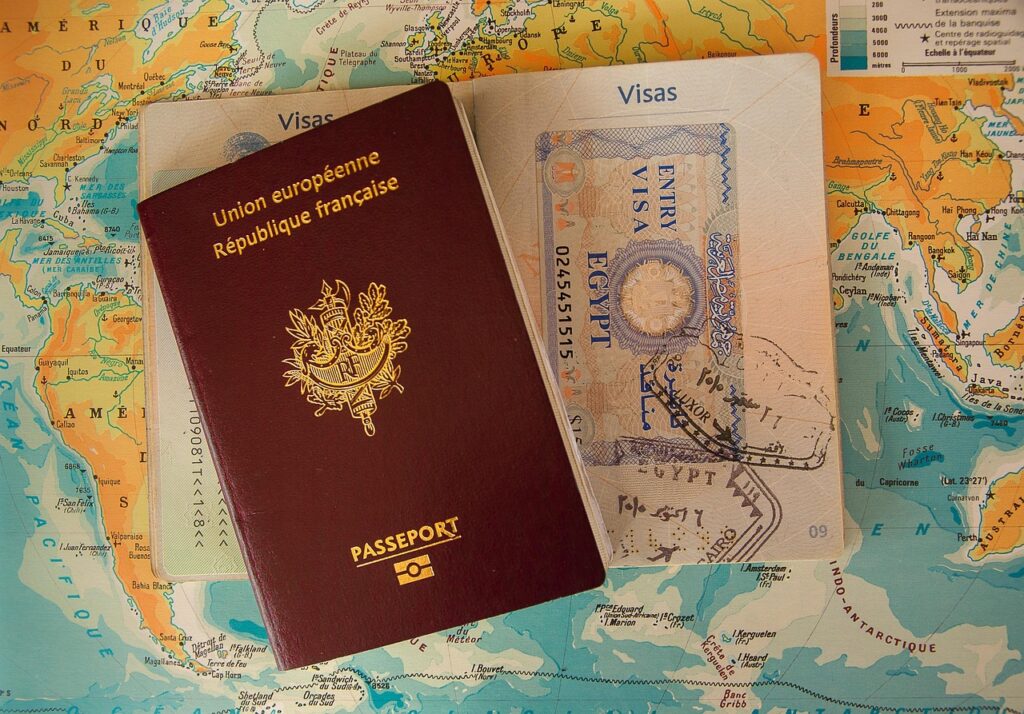
A visa concerns a country’s immigration rules for foreign nationals who want to travel there for a particular purpose. Where a visa is required, the destination country establishes the conditions under which the traveller may travel to its border and seek admission. Requirements can vary significantly according to nationality, destination and purpose of travel.
The purpose matters because immigration systems commonly distinguish between tourism, business, study, employment and other forms of travel. A traveller who qualifies for short-term tourism may not automatically have permission to work or study under the same authorization. Some travellers do not need a conventional visa at all, depending on the destination’s arrangements with their country of nationality.
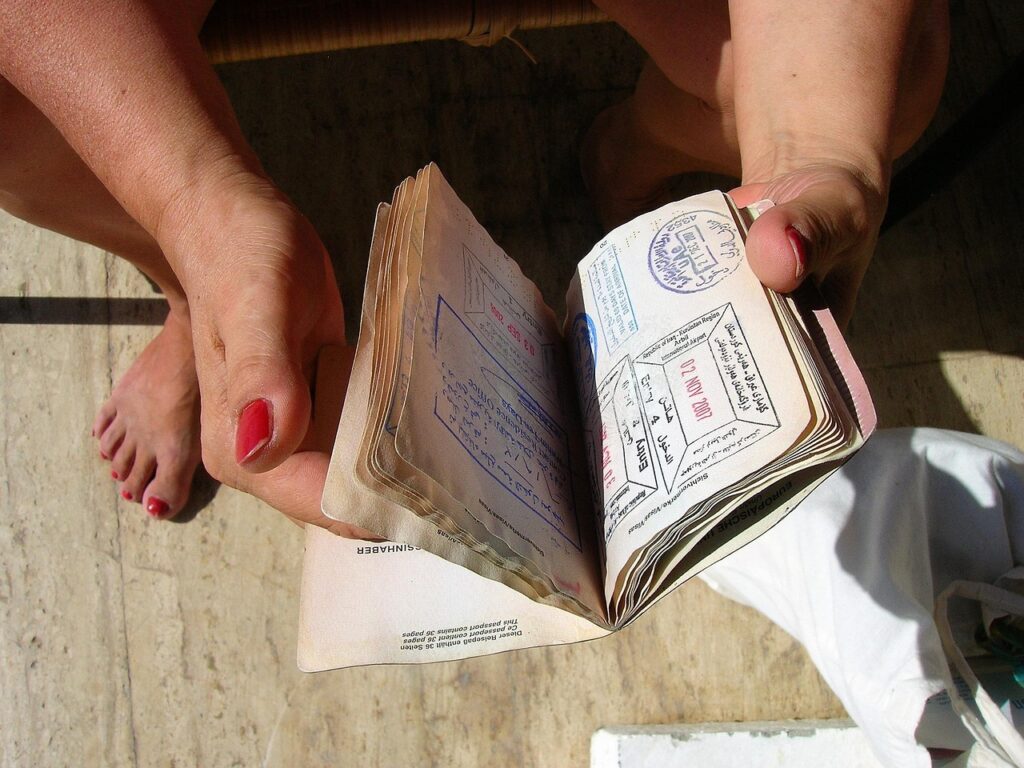
Passport vs Visa: The Difference
The simplest way to remember the difference is that the passport primarily identifies you as a traveller, while a visa or other travel authorization concerns the destination country’s conditions for your travel.
| Passport | Visa |
|---|---|
| Generally issued by your country | Generally issued or authorized by the destination |
| Establishes identity and nationality for international travel | Concerns authorization under destination immigration rules |
| A fundamental travel document | Required only when destination rules require it |
| Usually remains the primary travel document | Usually linked to the passport used for the application |
A visa is therefore not a substitute for a passport. In most international journeys where a visa is required, the traveller still needs the passport on which that visa or authorization is associated.
A valid passport does not automatically give you the right to enter another country
This is one of the most important distinctions in international travel. A traveller could arrive at an airport with a valid passport, a confirmed flight and a hotel reservation, yet still face a problem if the destination requires a visa or other authorization that the traveller does not have.
The reverse misconception is also worth avoiding: a visa does not necessarily guarantee entry. The U.S. Department of State, for example, explicitly explains that a visa allows a foreign citizen to travel to a U.S. port of entry and request permission to enter, while the border authority makes the admission decision. Other countries have their own immigration procedures, but the broader principle is important: authorization to travel and permission to enter are not always the same thing.
There is also a practical checkpoint before immigration. Airlines commonly check whether passengers appear to have the documents required for their itinerary. IATA’s Timatic system provides airlines with current information on passport, visa and other travel-document requirements, and its document-checking tools are designed to assess compliance before travel. Clearing an airline’s document check does not replace immigration inspection on arrival.
Visual 1: Passport vs Visa
PASSPORT
Identity + nationality + primary travel document
Issued by your country
VISA
Destination authorization + conditions + travel purpose
Required according to destination rules
Visa-Free, Visa on Arrival and eVisa
Not every international journey requires a conventional visa. Visa-free travel means that, under the applicable rules, an eligible traveller can enter without obtaining a traditional visa in advance. That does not mean there are no entry conditions. Depending on the destination, travellers may still need to satisfy requirements concerning passport validity, permitted stay, onward travel, accommodation, funds or other documentation.
A visa on arrival is different because the visa is obtained after reaching the destination, subject to that country’s eligibility requirements and procedures. An eVisa generally refers to a visa application and authorization process conducted electronically before travel. An Electronic Travel Authorization, or ETA, is another form of pre-travel authorization used by some countries for eligible travellers, but it should not automatically be treated as equivalent to a conventional visa.
The terminology can be confusing because countries use these terms differently. The safest approach is to check the destination’s own immigration authority rather than assuming that “visa-free”, “eVisa” or “ETA” means the same thing everywhere.
The Passport Validity Rule Travellers Often Miss
“My passport has not expired” is not necessarily the same as “my passport satisfies the destination’s entry requirement.”
Some countries require a passport to remain valid for a certain period beyond the intended stay. Others may apply different rules depending on nationality, residence status or the circumstances of the trip. Visa validity can also be different from the length of stay a traveller is ultimately permitted to make.
That distinction is important. A visa may have its own validity period, while the traveller’s permitted stay is determined by the destination’s immigration rules and border authorities. The U.S. Department of State, for example, specifically notes that a visa’s expiration date does not itself determine how long a traveller may remain in the United States.
Visual 2: Three different clocks
Passport validity → How long the travel document remains valid
Visa validity → When the visa or authorization can be used, under its conditions
Permitted stay → How long the traveller is allowed to remain
These three dates or periods should never be assumed to be interchangeable.
What to Check Before You Fly
For an Indian passport holder planning an international trip, the checklist should begin well before reaching the airport. First, check that the passport meets the destination’s validity requirements. Then confirm whether a visa is required for Indian citizens and whether the destination instead permits visa-free entry, visa on arrival or an eVisa.
The purpose and length of the trip matter too. A rule that applies to a tourist may not apply to someone travelling for work or study. Transit can create another layer of requirements, particularly when a journey involves changing airports or passing through another country’s immigration zone.
A useful way to think about the journey is:
Passport
↓
Visa / visa-free eligibility / ETA
↓
Airline document check
↓
Border control
↓
Admission decision
Each stage answers a slightly different question. Do you have a valid identity and travel document? Do you meet the destination’s travel-authorization rules? Can the airline carry you under the applicable requirements? And finally, does the destination’s border authority admit you?
That is why checking only whether your passport is valid is not enough. International travel depends on the combination of documents, nationality, destination, purpose and current entry rules.
Conclusion
The difference between a passport and a visa is straightforward once their roles are separated. Your passport is the core travel and identity document issued by your country. A visa, where required, is part of the destination country’s system for regulating the travel and admission of foreign nationals.
The important part is not memorizing every immigration rule in the world. It is understanding that a passport, visa, travel authorization and permission to enter are four related but distinct concepts. Before flying, check the requirements for your specific nationality, destination, itinerary and purpose of travel using current official information.